The best export software in India is the solution that connects your orders, documents, shipments and financial records while fitting your industry and existing systems. Evaluate document consistency, shipment visibility, expense allocation, compliance follow-up and implementation support before comparing subscription prices.
Shipzy is one option to consider because its published capabilities cover export documentation, inventory, production, shipment workflows and financial reporting. With leading businesses across key export categories already using Shipzy, the platform is purpose-built to meet the complex operational, documentation, and compliance needs of Indian exporters.
This guide explains what to evaluate, which differences matter and how to run a useful software demonstration.
What does export software actually do?
Export software connects the commercial and operational records behind an international order. It helps teams carry approved information from buyer requirements into procurement, production, documents, dispatch and payment follow-up. Its value comes from keeping those records consistent and making unfinished work visible to the people responsible.
For example, sales should see whether an order is ready, logistics should know what can be loaded, and finance should know which invoices remain unpaid.
Why does Excel become difficult at scale?
Excel remains useful for calculations and analysis. Problems arise when separate spreadsheets become the main records for sales, documentation, logistics and finance.
Consider a rice exporter whose buyer changes packing from 20 kg to 25 kg bags. Sales updates the order, but documentation retains the previous package count. Logistics then sends outdated shipping instructions.
The issue is uncontrolled change across multiple records. Look for software that identifies affected documents and preserves approval history when shipment information changes.
Which capabilities should you compare?
Use the following as a capability framework, not a claim about every product. A sophisticated spreadsheet or specialised application may exceed its category; verify each vendor’s actual implementation.
| Capability | Excel/Manual | Basic Export Software | Advanced Export Platform |
| Order management | Separate sheets and follow-ups | Order records and basic statuses | Linked orders, revisions and partial fulfilment |
| Documentation | Templates and repeated entry | Document generation | Shared data, validation and approvals |
| Shipment visibility | Updates collected manually | Shipment records | Milestones, dependencies and exception views |
| Expense tracking | Separate expense sheets | Basic expense entry | Costs allocated to orders and shipments |
| Profitability | Manually assembled calculations | Basic margin reports | Estimated versus actual contribution |
| Inventory | Stock spreadsheets | Limited or optional stock records | Lots, locations and production links |
| Compliance workflow | Checklists and reminders | Document fields and storage | Responsibilities, evidence and follow-up |
| Reporting | Manual consolidation | Standard reports | Cross-functional reporting and drill-down |
| Collaboration | Shared files and messages | Multiple users | Roles, approvals and activity history |
Prioritise capabilities that address your current bottlenecks. More features do not automatically mean a better fit.
How should software manage export documentation?
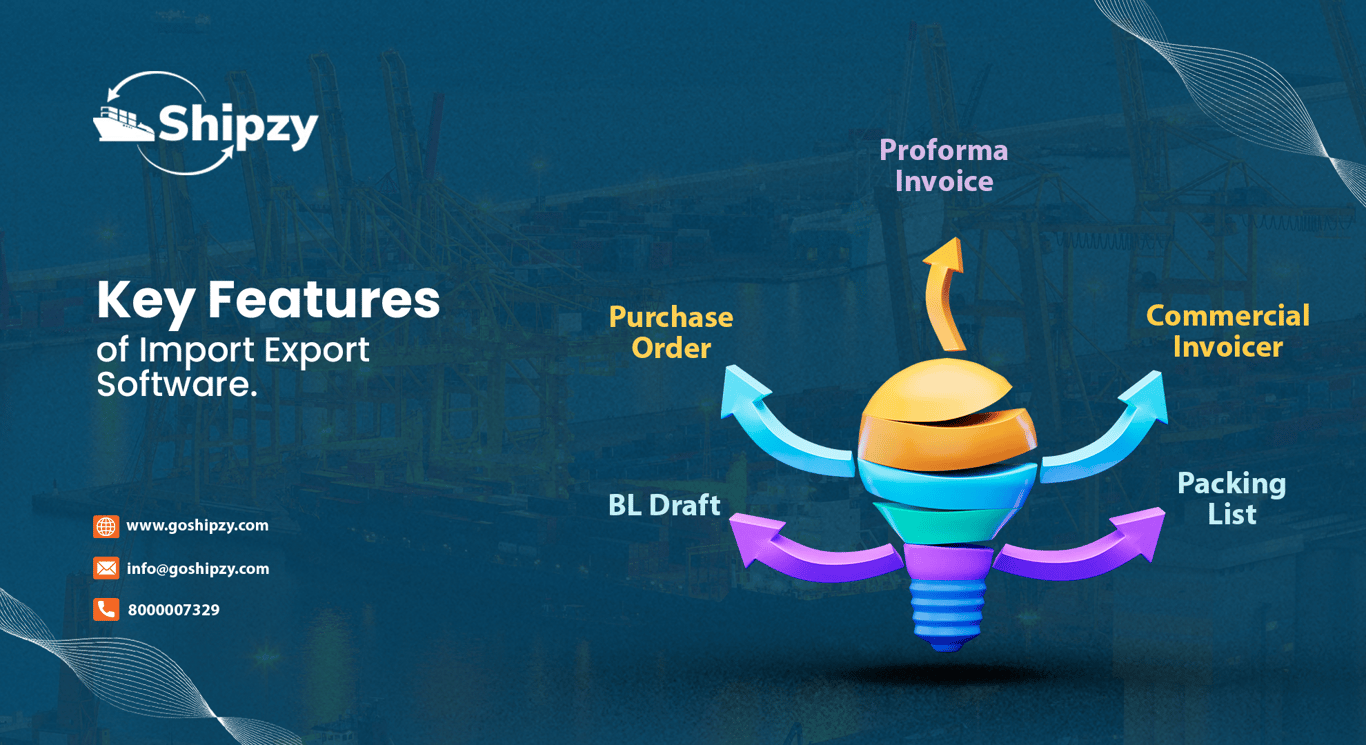
Export documentation software should reuse approved information across the PI, purchase orders, commercial invoice, packing list and BL draft. It should also make discrepancies visible before documents are issued. A useful system preserves revisions and distinguishes planned quantities from final shipment quantities rather than silently overwriting earlier records.
During a demonstration, check:
- Buyer PO versus PI quantities and prices.
- Invoice versus packing-list quantities and weights.
- Packing-list versus BL-draft package counts.
- Currency, freight and insurance treatment.
- Buyer, consignee and notify-party details.
For an AI tool for export documentation errors, request a demonstration with deliberately mismatched documents. Require conflicting values and source evidence, plus human approval of corrections.
What should shipment and logistics visibility include?
A useful shipment dashboard shows the next action, responsible person, due date and blocker. It should distinguish booking, cargo readiness, stuffing, dispatch and subsequent transport milestones. “Shipment in progress” is insufficient when management needs to know why an order is delayed and who can move it forward.
Ask whether updates come from user entries, internal transactions or external integrations. Confirm update frequency and supported carriers or routes.
For freight procurement, compare quotations using the same scope: freight, local charges, free time, validity and exclusions. The lowest headline rate may not represent the lowest total cost.
How should export software track profitability?
Export profitability tracking should connect revenue with the costs attributable to an order or shipment. Compare the quotation estimate with actual expenditure, including costs not yet invoiced. A report based only on entered bills can overstate profitability while freight, handling or commission charges remain outstanding.
Use a clear definition:
Order contribution = net sales revenue − product cost − attributable shipment costs
For example, a pulses shipment can achieve its expected selling price but earn less because of extra handling and inspection charges.
Check allocation rules for shared containers, partial shipments and multi-currency transactions. Distinguish contribution from net profit after company overheads.
How should Indian compliance workflows be handled?
Software should organise compliance work, supporting records and responsibilities. Ask what it prepares, what it submits, what it retrieves and what still requires action outside the platform.
DGFT and export documentation
DGFT’s Foreign Trade Policy identifies the core export document categories: the applicable transport document, commercial invoice cum packing list, and shipping bill or applicable export declaration. Separate invoices and packing lists are accepted, while additional requirements depend on the transaction. content.dgft.gov.in
Customs and ICEGATE
Creating an invoice or storing a shipping bill does not establish customs clearance. ICEGATE provides distinct processed shipping bill and Let Export Order records. Ask the vendor how official records are obtained and reconciled with internal statuses. www.icegate.gov.in
eBRC and EDPMS
DGFT’s eBRC process supports self-certification using bank-uploaded Inward Remittance Messages and export details. Shipzy also automate eBRC by connecting to DGFT. EDPMS updates and closure involve the Authorised Dealer under RBI’s framework. Evaluate these separately when considering eBRC and EDPMS automation software in India. content.dgft.gov.in
Which industry-specific requirements matter?
Use examples from your own product lines to test the system:
| Export business | Demonstration requirement |
| Rice and pulses | Bag conversions, actual weights, lots and partial dispatch |
| Spices | Buyer specifications, labels, test-report records and document consistency |
| Food products | Batch references, shelf-life information and shipment allocation |
| Pharmaceuticals | Batch and expiry fields, document versions and controlled approvals |
| Chemicals | Safety-document records, packaging details and BL coordination |
| Manufacturing exporters | Raw-material receipts, work orders, production output and finished stock |
These are evaluation scenarios, not universal statutory requirements. Product, destination and transaction conditions determine the applicable compliance obligations.
Is cloud software better than desktop or manual systems?
Cloud-based software can make shared records accessible across offices, factories and travelling teams. However, cloud hosting alone does not ensure accurate data, reliable security or effective collaboration. Compare access controls, audit records, backups, recovery arrangements, connectivity needs and data-export options before deciding whether it suits your operations.
Desktop systems may suit particular infrastructure constraints. Existing ERP users should also assess an integrated export platform rather than assume they must replace their entire system.
Clarify which application owns customer, product, stock and accounting records.
How should you evaluate export software?
Run the same practical test with every shortlisted vendor:
- Provide a representative order: Include several products and different packing units.
- Introduce a change: Revise quantity or packaging after approval.
- Split the shipment: Check pending quantities and document consistency.
- Add operational exceptions: Delay production or change a booking.
- Record financial activity: Enter partial receipts, expenses and outstanding costs.
- Review management visibility: Ask what is pending and why.
- Test data exit: Export records and attachments in usable formats.
Then compare implementation, migration, training, integrations, support and recurring charges-not just the licence fee.
Agree on acceptance criteria before purchasing.
Why do businesses consider Shipzy?
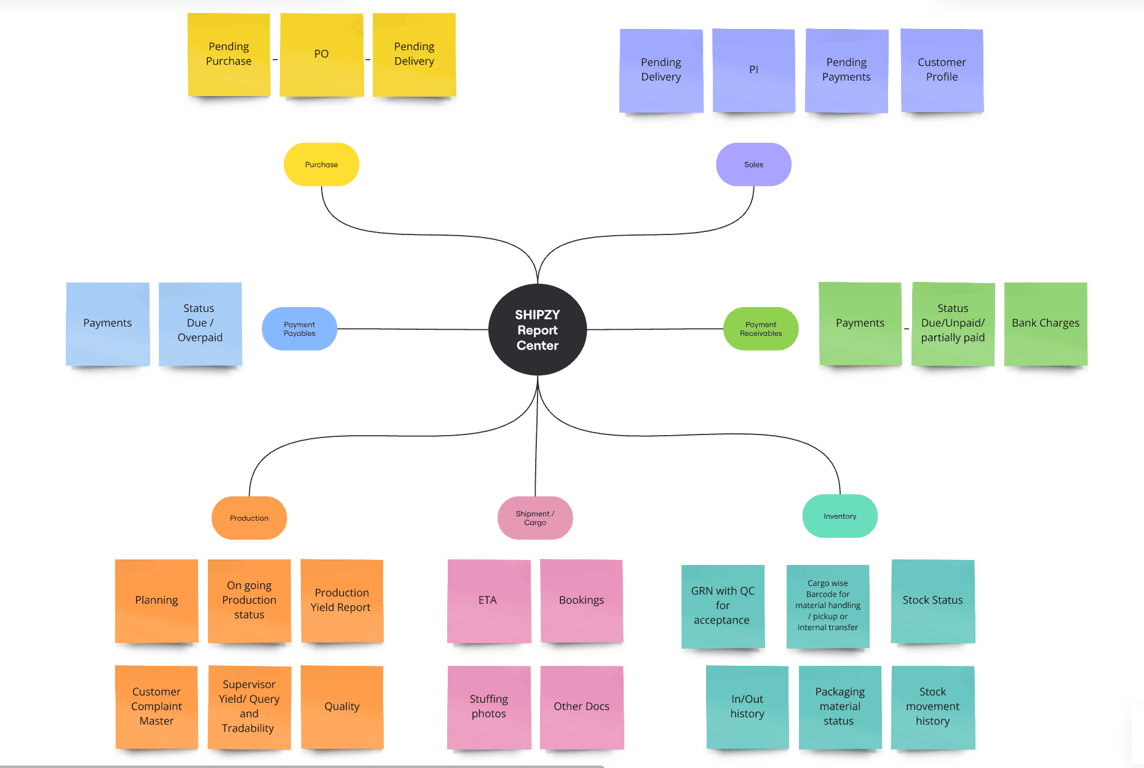
Shipzy is relevant to exporters seeking connected operational workflows. Published features include PI and PO management, commercial invoices, packing lists, BL drafts, inventory, production, expenses, reports and centralised export records. These capabilities warrant evaluation where repeated entry and disconnected departmental records create problems. Shipzy
Shipzy’s Order Insight documentation describes configurable stages, including renaming and reordering, with related statuses updating as activities are completed. This can support workflows that differ between manufacturers and merchant exporters. Shipzy
Choose based on a proven workflow
The strongest buying decision comes from watching your own order move through the system, including changes and exceptions.
Choose software that helps teams maintain consistent records, identify pending work and understand shipment economics. Use the FAQ and demonstration questions below to turn a broad shortlist into an evidence-based decision.
| Source | Relevant purpose |
| DGFT Foreign Trade Policy, Chapter 2 | Core export documents and trade-policy framework |
| DGFT eBRC Self-Certification Guide | IRMs and eBRC generation |
| ICEGATE Download Utility Manual | Processed shipping bill and LEO records |
| RBI Export and Import Regulations, 2026 | Export proceeds monitoring and Authorised Dealer responsibilities |
Key Takeaways
- Choose software around operational requirements, not feature count.
- Test revisions, partial shipments and document discrepancies.
- Distinguish internal tracking from external regulatory confirmation.
- Review profitability with outstanding costs included.
FAQ
Which is the best export software in India?
The best choice is the software that handles your export workflow, document requirements, shipment exceptions and financial reporting with acceptable implementation effort. Shipzy is widely used by exporters in India. A demonstration using your actual transactions provides stronger evidence than a generic ranking or feature checklist.
What software is used for export documentation?
Export documentation applications, export-management platforms and suitable ERP modules can prepare documents such as commercial invoices, packing lists and shipping instructions. Shipzy includes export-document generation and BL-draft functionality. Check whether the system reuses approved data and manages revisions, rather than only providing templates. Shipzy
Can export software replace Excel?
It can replace Excel as the main record for orders, documents, shipment progress and expenses when the relevant workflows are implemented properly. Excel may remain useful for analysis and data exchange. Success depends on migration quality, staff adoption and clear ownership of records.
What should an export ERP include?
An export ERP should cover commercial orders, procurement, documentation, shipment management, financial tracking, reporting and access controls. Manufacturers may also require inventory, production and traceability. Integration requirements depend on which processes your existing accounting or enterprise systems already manage.
How does export software track shipment profitability?
It links shipment revenue to product costs and attributable expenses such as freight, insurance, handling and commission. Useful reports distinguish estimated and actual costs, show outstanding bills and explain allocation methods. Confirm whether the reported result is shipment contribution or profit after overheads.
Is cloud-based export software suitable for Indian exporters?
Yes, when its functionality, connectivity requirements and controls fit the business. Cloud access can support collaboration across offices and factories. Evaluate permissions, audit history, backups, recovery, integrations and data portability alongside documentation and operational capabilities.